
AI Resilient Careers That Are Likely to Grow Alongside AI

Updated: Sep 8
No career can be guaranteed to be AI-proof, but jobs that combine human judgement, creativity, communication and strategic thinking may be more resilient to automation.
That is the more honest way to think about work in the age of AI. Some tasks will shrink. Some entry-level work will change. New roles will appear. The careers most likely to grow are not the ones untouched by technology, but the ones where people use AI as a tool while still making decisions that require context, trust and responsibility.
So instead of searching only for AI proof careers, it is smarter to ask a better question: which careers will still need humans even when AI becomes more common?

What makes a career more resilient to AI
AI is good at pattern recognition, fast drafting, summarising information and automating repeatable tasks. It can help write reports, generate images, analyse data and answer common questions.
It is weaker when work needs:
Human judgement
Choosing the right action when the situation is unclear or sensitive.
Leadership
Motivating people, handling conflict and taking responsibility for outcomes.
Creativity
Developing original ideas that connect culture, emotion and purpose.
Relationship-building
Earning trust with clients, patients, students, teams or communities.
Strategic thinking
Deciding what matters, what to ignore and where to go next.
Complex problem-solving
Solving messy problems with many moving parts and human consequences.
This is why many AI resistant jobs are not “technology-free”. In fact, many will use AI heavily. The difference is that AI will support the work rather than fully replace the human role.
Careers likely to grow alongside AI
The following career areas are not immune to change. They are likely to evolve because they depend on human skills that are hard to automate completely.
Career area | Why it may be resilient | How AI may change the work |
Healthcare and allied health | Care depends on empathy, diagnosis, ethics and patient trust | AI may help read scans, organise records and suggest treatment options |
Education and training | Teaching needs motivation, feedback and human understanding | AI may create practice material, track progress and support personalised learning |
Business leadership and management | Leaders make decisions under uncertainty and guide people | AI may help with reports, forecasting and routine planning |
Creative and design roles | Audiences value originality, taste and cultural understanding | AI may speed up drafts, mood boards, edits and concept testing |
Law, compliance and policy | These roles need interpretation, judgement and accountability | AI may help review documents and find patterns in large files |
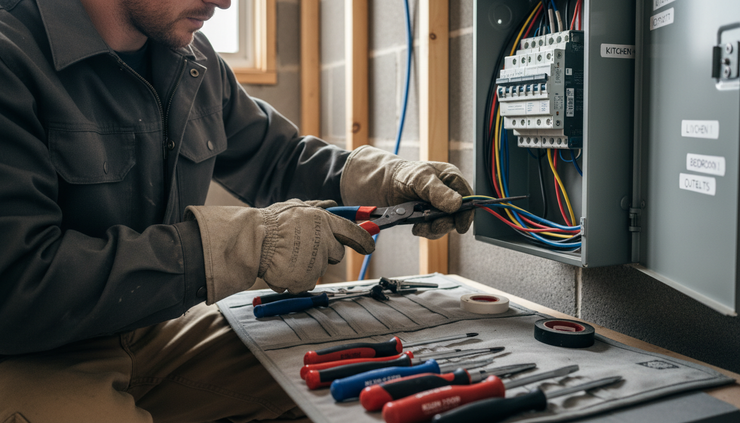
Skilled trades and field work | Work happens in physical, changing environments | AI may support diagnostics, scheduling and quality checks |
Counselling and human support roles | Trust, empathy and ethics drive the work | AI may assist with admin, reminders and resource suggestions |
Entrepreneurship | Founders spot needs, take risks and build relationships | AI may reduce the cost of research, content, prototypes and operations |
These are not guaranteed careers safe from AI. They are better seen as careers where human capability remains central.
AI will change jobs before it removes them
The most common change may not be job loss. It may be task loss.
A marketing writer may spend less time creating first drafts and more time shaping ideas, checking facts and understanding customers. A financial analyst may spend less time cleaning spreadsheets and more time explaining risk. A teacher may spend less time making worksheets and more time coaching students who learn at different speeds.
This pattern matters for future jobs and AI. The career advantage will go to people who can combine domain knowledge with AI literacy.
That means knowing how to:
Ask better questions of AI tools
Check AI output for errors and bias
Use AI without copying blindly
Protect privacy and sensitive information
Apply human judgement before making decisions
AI can produce a confident answer that is still wrong. A skilled professional knows when to trust it, when to test it and when to ignore it.
Human skills will become more valuable, not less
As AI handles more routine work, human skills may carry more weight. The ability to listen carefully, manage conflict, persuade honestly and lead teams will not become outdated.
For example, a doctor may use AI to compare symptoms against medical records. The patient still needs someone to explain the situation with care. A lawyer may use AI to search case material. The client still needs judgement on risk and strategy. A designer may generate 30 concepts using AI. The final choice still depends on taste, purpose and audience.
These skills grow through practice, not only reading. Students and professionals should build them through projects, internships, discussions, case work and real problem-solving.

How students can prepare for AI-resilient careers
A smart career plan now has two parts. Build a strong professional skill set, and learn how AI fits into that field.
Students can start with practical steps:
Learn the basics of AI tools used in the chosen domain
Take projects that require research, writing, analysis and communication
Practise explaining ideas clearly, both in writing and speech
Build a portfolio of real work rather than only certificates
Study ethics, privacy and responsible technology use
Develop comfort with data, even outside technical careers
For example, a commerce student can use AI to model business scenarios, but still needs accounting, decision-making and communication skills. A design student can use AI to explore visual directions, but still needs concept development and critique. A healthcare student can learn AI-assisted tools, but must also develop empathy and duty of care.
This is the Diorama takeaway: AI literacy should sit alongside business, creative and professional skills, not replace them. The strongest candidates will know both the tool and the field.

The real goal is career resilience
The safest mindset is not fear of AI. It is adaptability.
Careers that grow alongside AI will reward people who can learn continuously, work well with others and make thoughtful decisions. Technical knowledge will help, but it will not be enough on its own. The future belongs to professionals who can use AI well and still bring judgement, creativity and trust to the work.
No job title is permanently protected. A career built on curiosity, human skill and responsible use of technology has a much better chance of staying relevant.


Comments